Short answer
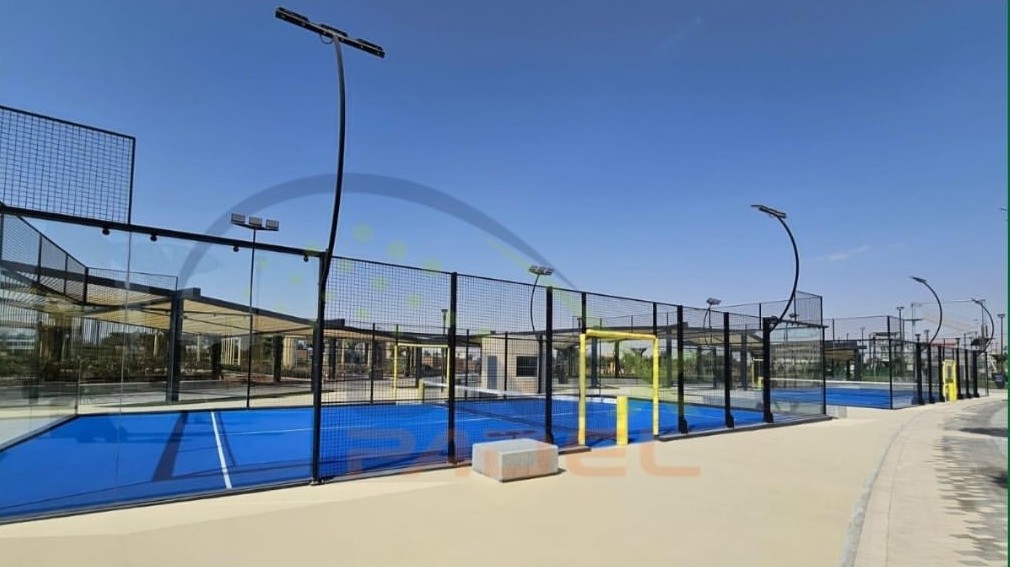
The FIP allows three padel court surfaces: artificial grass, concrete (cement) and synthetic materials, provided the bounce is regular. Sand-filled artificial turf is the standard for clubs and competitions because it is kinder on joints and allows controlled sliding; concrete suits low-maintenance public courts.
The playing surface decides how fast the ball travels after the bounce, how players move and how their knees feel after a session. It is also one of the parts of a court that needs regular care. Here is how the options compare and how to choose.
Which surfaces does the FIP allow?
According to the FIP Rules of Padel, the floor may be cement (concrete), a synthetic material or artificial grass, as long as it gives a regular bounce. The rules also require:
- one colour for the whole floor, in green, blue or terracotta tones, clearly different from the walls;
- a level surface, with no more than 3 mm of deviation under a 3 m straightedge;
- on surfaces without drainage, a slope of no more than 1% from the centre to the edges.
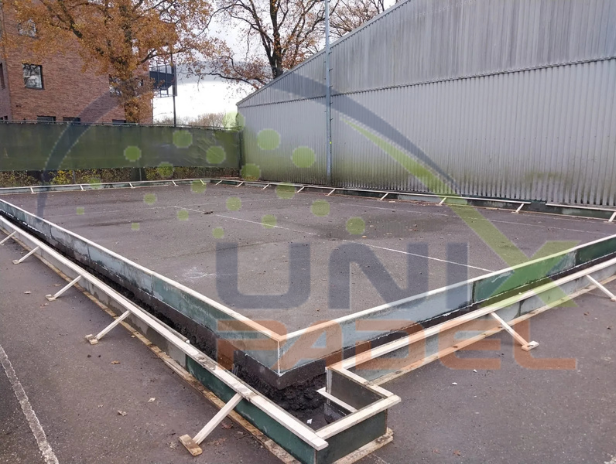
Keep in mind the difference between the base and the playing surface: almost every court stands on a concrete or porous concrete slab, and the playing surface is laid on top. The base options are covered in our foundation guide.
How do the surfaces compare?
| Sand-filled artificial turf | Concrete (cement) | Synthetic (resin) | |
|---|---|---|---|
| Bounce and speed | Predictable, medium speed | Fast, higher bounce | Fast, depends on coating |
| Player comfort | Cushioned, allows controlled slides | Hard on joints | Hard to medium |
| Maintenance | Regular brushing, sand top-ups | Very low | Low, periodic recoating |
| Typical use | Clubs, hotels, competitions | Public parks, multi-sport areas | Some indoor and public courts |
Why do most clubs choose artificial turf?
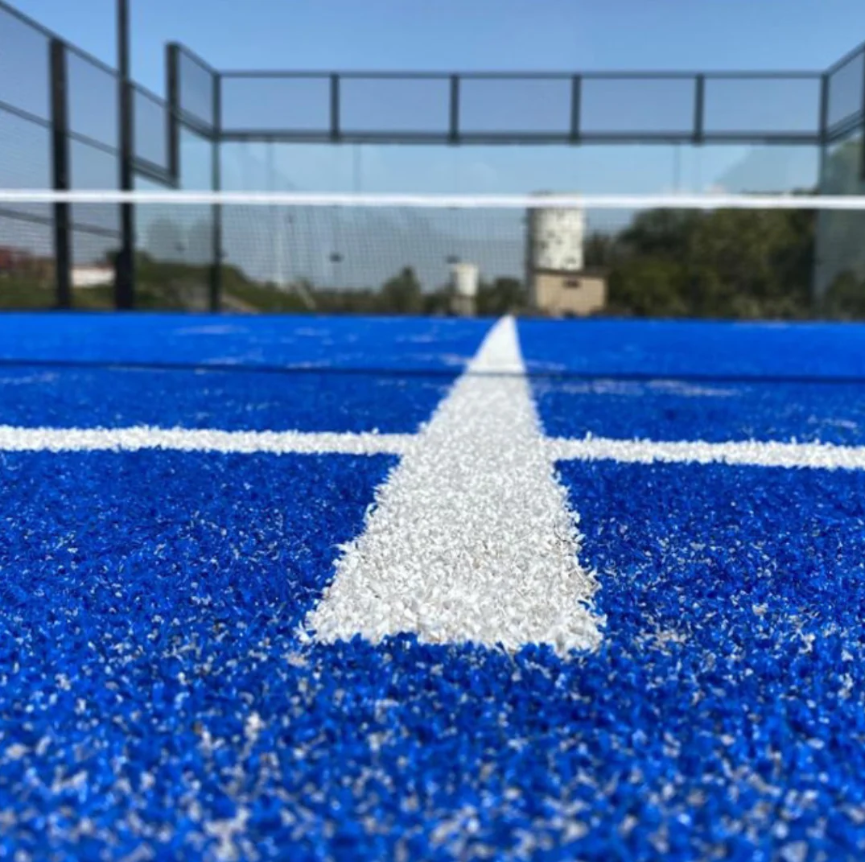
Sand-filled artificial turf is the standard for clubs and is used at professional events. The silica sand between the fibres lets players slide in a controlled way to reach wide balls, cushions each step and keeps the bounce consistent across the court. That comfort is what keeps members playing several times a week.
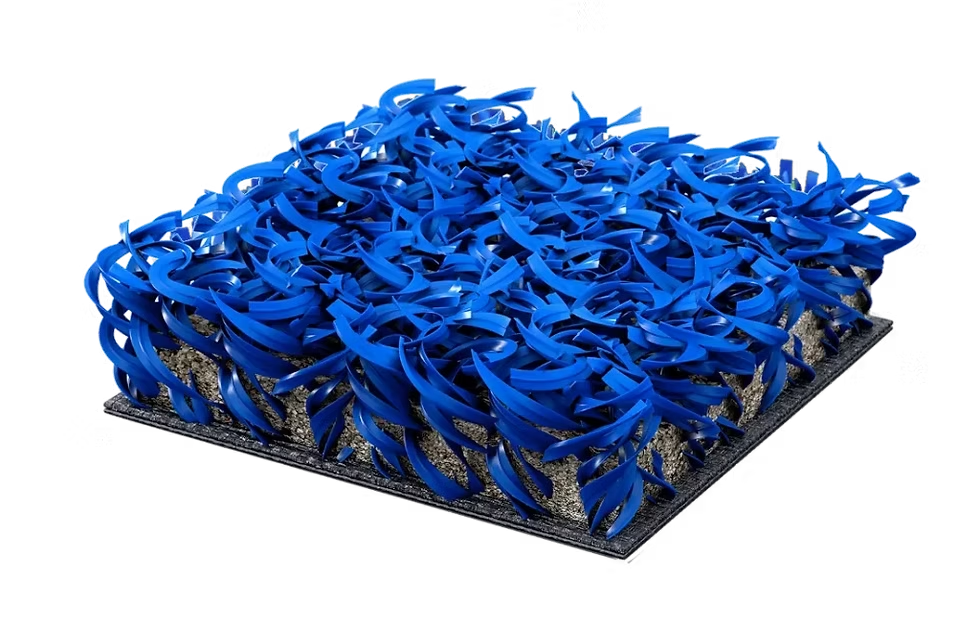
Turf comes in two main yarn families:
- Monofilament: straight individual fibres, a natural look and steady ball response.
- Textured (curled): crimped fibres that hold the sand well and give a slightly slower, very uniform bounce.
Pile height for padel turf is usually around 10–15 mm, filled with rounded silica sand.
When does concrete make sense?
Concrete has a place where the court will be used without staff to look after it, for example in public parks. It is durable and has almost no routine maintenance. The trade-offs are higher impact on players’ joints, a faster bounce and faster wear on balls and shoes. For a commercial club, those drawbacks usually cost more in lost bookings than the turf upkeep they save.
Which Unixpadel turf fits your project?
Unixpadel offers four FIP-approved, sand-filled turf systems: ADLX4T, ADLX3T, Cleek and ADL KDK. They differ in yarn type, yarn weight and pile height (about 12–15 mm), which changes ball response, sand retention and how the turf wears under heavy use.
Compare their specifications on the turf systems page, or ask our team which suits your climate, indoor or outdoor use and level of play.

How do you keep the surface in shape?
Turf lasts much longer with weekly brushing, regular sand top-ups and periodic decompaction. The full routine is in padel court maintenance. Laying the turf is part of the build sequence in how to build a padel court.
Need help choosing? Ask our engineers for a turf recommendation and samples.